Hospital Water Bills: Average Costs, Compliance Requirements & Conservation ROI
Hospitals use 100,000-500,000+ gallons/day, spending $150,000-$800,000/year on water and sewer. See average costs by bed count, compliance requirements, and how to save 20-35% without affecting patient care.
Key Takeaway
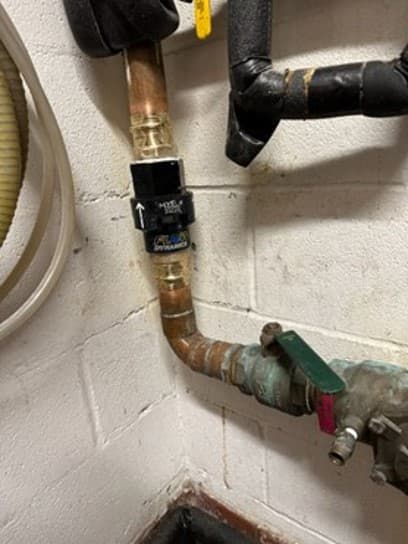
A typical 200-bed hospital pays $12,000-$35,000/month ($144,000-$420,000/year) for water and sewer combined. Hospitals are the most water-intensive commercial buildings in the U.S., consuming 100-300 gallons per bed per day. Infrastructure-based conservation measures — Smart Valve technology, cooling tower optimization, and condensate recovery — can reduce costs 20-35% without any impact on clinical operations or infection control protocols.
How Much Is a Hospital Water Bill Per Month?
Healthcare facilities are among the most water-intensive buildings in the commercial sector. The monthly water bill depends primarily on bed count, service type, and geographic location:
| Facility Type | Beds | Daily Gal | Monthly Bill* | Annual Cost |
|---|---|---|---|---|
| Community Hospital | 100 | 20,000 | $8,000-$15,000 | $96K-$180K |
| Regional Hospital | 200 | 40,000-60,000 | $12,000-$35,000 | $144K-$420K |
| Large Medical Center | 500 | 100,000-150,000 | $35,000-$65,000 | $420K-$780K |
| Academic Teaching Hospital | 800+ | 200,000+ | $50,000-$100,000+ | $600K-$1.2M |
*Based on national average combined water+sewer rate of $12.50/kGal. Actual costs vary by municipality.
Where Does All That Water Go?
Unlike office buildings where domestic use (restrooms, sinks) dominates, hospitals distribute water across specialized clinical and operational systems:
25-30%
HVAC Cooling Towers
Year-round climate control for ORs, labs, patient rooms
20-25%
Domestic (Restrooms, Sinks)
Patient rooms, visitor areas, staff facilities
15-20%
Sterilization & Autoclaves
Surgical instruments, medical devices, CSR operations
10-15%
Laundry Operations
Linens, gowns, PPE — 15-30 lbs/bed/day
Compliance Requirements That Drive Water Costs
Healthcare facilities face water-related compliance requirements that don't apply to other commercial buildings:
- Joint Commission (JCAHO) — EC.02.05.01: Requires documented water management programs including Legionella risk assessment, tempered water for patient safety, and validated disinfection protocols.
- CDC Healthcare Infection Control Guidelines: Mandates specific water temperature ranges for handwashing stations and sterile processing. Water-saving fixtures must still meet minimum flow rates for infection control.
- ASHRAE Standard 188: Requires building water management programs for "at-risk" facilities — all hospitals qualify. Cooling tower blowdown and hot water circulation requirements directly increase water consumption.
- CMS Conditions of Participation: Medicare/Medicaid reimbursement requires demonstrated water system maintenance. Non-compliance can trigger survey findings and remediation costs far exceeding any water savings.
Conservation ROI: Infrastructure Solutions for Hospitals
The key principle for hospital water conservation: reduce costs through infrastructure, not clinical operations. No solution should touch patient care, infection control, or sterile processing workflows.
| Solution | Savings | Payback | Patient Impact |
|---|---|---|---|
| Smart Valve (meter accuracy) | 15-25% | 6-14 months | None |
| Cooling tower optimization | 20-30%* | 12-24 months | None |
| Condensate recovery | 5-10% | 18-36 months | None |
| Laundry water recycling | 30-40%* | 24-36 months | None |
| Leak detection & repair | 5-10% | Immediate | None |
*Percentage of sub-system water, not total facility usage
Example: 200-Bed Regional Hospital
Annual water+sewer: $300,000 | Smart Valve savings (20%): $60,000/yr
Installation cost: $35,000 | Payback: 7 months
5-year net benefit: $265,000 — with zero changes to clinical operations
Calculate Your Hospital's Savings
Enter your facility's water usage to see exact ROI projections for Smart Valve technology.
Frequently Asked Questions
How much is a hospital water bill per month?
A typical 200-bed hospital pays $12,000-$35,000/month for water and sewer combined. Large 500+ bed medical centers can exceed $50,000-$65,000/month. Costs vary significantly by geography — hospitals in San Francisco or Baltimore can pay 2-3x the national average.
How much water does a hospital use per day?
Hospitals use 100-300 gallons per bed per day — approximately 3-5x more per square foot than a typical commercial office building. A 200-bed hospital uses roughly 40,000-60,000 gallons per day.
Can hospitals reduce water usage without affecting patient care?
Yes. Infrastructure-based solutions like Smart Valve technology, cooling tower optimization, and condensate recovery reduce costs 20-35% without touching clinical operations. These systems work at the mechanical/meter level — completely invisible to patients and clinical staff.