5 Commercial Water Conservation Strategies That Actually Work
Beyond low-flow fixtures: explore proven water conservation strategies for commercial properties that deliver measurable ROI without affecting operations.
Key Takeaway
The most effective commercial water conservation strategies address meter accuracy, pressure optimization, and infrastructure efficiency—not just user behavior. These approaches deliver 15-30% savings without impacting operations.
Beyond Low-Flow Fixtures
When facilities managers think about water conservation, the first solution that comes to mind is usually low-flow fixtures. While these can help, they only address one piece of the puzzle—and require tenant or user cooperation to work effectively.
The strategies below work independently of user behavior, targeting the infrastructure and billing accuracy that most properties overlook.
Strategy 1: Address Meter Accuracy
Most commercial properties don't realize that their water meters measure more than just water. Municipal water contains dissolved air that expands as pressure drops at the meter, causing over-registration of 15-25% in many cases.
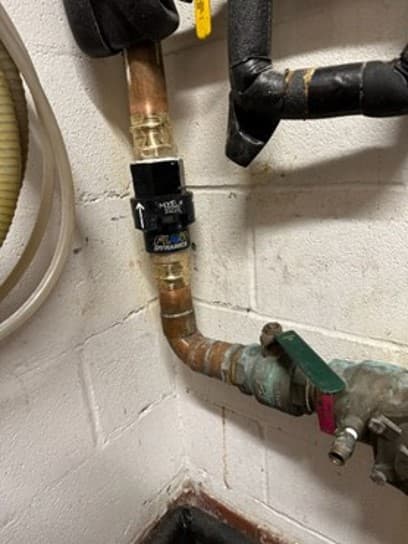
Implementation: Smart Valve technology installed after the meter prevents air expansion, ensuring you only pay for actual water delivered. This is a one-time installation with no ongoing maintenance.
Typical Savings: 15-25%
ROI Timeline: 12-18 months
Strategy 2: Pressure Optimization
High water pressure doesn't just waste water—it accelerates wear on plumbing fixtures, increases the risk of leaks, and causes higher flow rates at every tap. Many buildings operate at pressures far higher than necessary.
Implementation: Install pressure-reducing valves (PRVs) at the main supply or at individual floors. Target 40-60 PSI for most applications.
Typical Savings: 5-15%
Additional Benefit: Extended fixture life, fewer leaks
Strategy 3: Real-Time Leak Detection
Underground leaks and hidden pipe failures can waste thousands of gallons before they're detected. Many properties only discover leaks when they receive an unusually high water bill—sometimes months later.
Implementation: Install smart water monitoring sensors that alert maintenance teams to unusual usage patterns in real-time. Look for systems that integrate with building management software.
Typical Savings: 5-10%
Prevention: Avoids catastrophic leak damage costs
Strategy 4: Cooling Tower Optimization
For buildings with cooling towers, water consumption for HVAC can exceed domestic use. Optimizing cycles of concentration and conductivity controls can significantly reduce makeup water requirements.
Implementation: Work with a water treatment specialist to optimize chemical treatment and conductivity setpoints. Consider bleed-off automation.
Typical Savings: 10-30% of cooling water
Best For: Office buildings, hospitals, hotels with large cooling systems
Strategy 5: Irrigation Efficiency
Landscape irrigation often accounts for 20-30% of commercial property water use. Smart controllers, drip irrigation, and native landscaping can dramatically reduce outdoor water consumption.
Implementation: Install weather-based smart irrigation controllers that adjust watering based on actual conditions. Convert spray heads to drip where possible.
Typical Savings: 25-50% of irrigation water
Bonus: Many utilities offer rebates for smart controllers
Combining Strategies for Maximum Impact
The most successful water conservation programs combine multiple strategies. A typical commercial building implementing all five approaches might see total water bill reductions of 30-50%.
Recommended priority order:
- Meter accuracy (Smart Valve) - Highest ROI, no operational impact
- Leak detection - Prevents costly damage
- Pressure optimization - Quick implementation
- Cooling tower optimization - If applicable
- Irrigation efficiency - Seasonal impact
Written by
Smart Valve Team
Published
2025-01-10