Average Commercial Water Utility Rates per CCF in 2026: Cost Analysis
Learn how commercial water utility rates are calculated per CCF (100 cubic feet), the factors driving the 2026 nationwide rate hikes, and how businesses can immediately reduce their volumetric charges.
Key Takeaway
Commercial water utility rates are predominantly billed by CCF (100 Cubic Feet = 748 Gallons). In 2026, nationwide averages for water vary drastically based on municipality infrastructure and geography, commonly falling between $4.50 and $8.50 per CCF. Because commercial properties face increasing, tiered block rates, the most effective financial defense is installing a Smart Valve to eliminate the measurement of entrained air—reducing billed CCF volume by 15% to 25%.
1 CCF
748 Gallons
Tiered
Structure Strategy
20%
Typical Overcharge
High
Sewer Multipliers
Understanding the CCF Measurement
If you manage a large facility, chances are your water utilization is measured in CCF (Centum Cubic Feet). One CCF is equivalent to 748 gallons. Unlike residential meters that may measure incrementally in raw gallons, industrial and commercial applications use CCF to simplify the billing of massive water flow volumes.
Nationally, there is no single established baseline for commercial water rates. Variations rely entirely on municipality overhead, infrastructure age, regulatory standards (like PFAS compliance filtering), and drought conditions. Most utilities utilize an increasing block rate structure—the more CCF segments you use, the higher the rate climbs per segment.
The Danger of Tiered Surcharges:
When your CCF volume climbs into higher tiers, you don't just pay linearly. Your marginal cost per CCF surges. Any inaccuracy in your meter reading compounds your financial losses.
The Flaw in CCF Volume Measurement
Water meters are positive displacement devices. They count the volume of matter passing through them. The fatal flaw—costing U.S. commercial buildings millions annually—is that meters cannot distinguish between the volume of water and the volume of entrained air.
Municipal water systems, subject to heavy underground pressures and infrastructural leaks, constantly ingest and absorb air pockets. When this water meets your meter, the pressure differentials cause these air segments to expand. Your meter registers this expanded air as CCF volume.
Take Control of Your Billed CCF
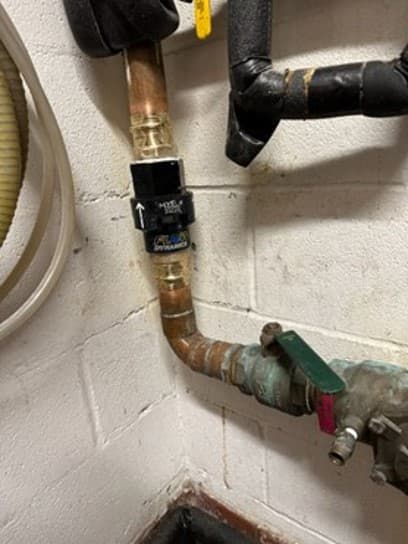
The Smart Valve compresses gas and air immediately before it passes through your meter. This guarantees that your water meter is only spinning for the liquid water entering your facility, not the air hitching a ride. Over thousands of CCF, eliminating this 15-25% over-registration results in immediate, massive reductions to both your water and aligned sewer charges.
Want to Cut Your CCF Volume Down to Size?
Enter your monthly billed amount into our calculator to see how much of your CCF usage might just be hot air.
Test Your Savings Potential →Written by
Smart Valve Team
Published
2026-03-30